Comparison of the effects of cranial electrotherapy stimulation and midazolam as preoperative treatment in geriatric patients
A CONSORT-compliant randomized controlled trial.
Authors
Park BS, Jin S, Kim WY, Kang DS, Choi YJ, Lee YS.
Publication
Medicine (Baltimore). 2022 Sep 2; 101(35).
Device Used
Alpha-Stim 100®
Key Variables
Anxiety
Objective
To observe and compare the clinical effect of cranial electrotherapy stimulation (CES) and midazolam as preoperative treatments in geriatric patients.
Design
Initially, 90 patients were recruited, but 10 patients were withdrawn either spontaneously or in accordance with the exclusion criteria. In this study, 80 patients were included and randomly divided into 2 groups using a computer-generated randomization method: midazolam premedication group (M group, n = 40) and CES pretreatment group (CES group, n = 40).
Preoperative anxiety was measured using the 5-point Likert scale, with anxiety levels rated from "Not at all" to "Severe". The sedation score was assessed using the Ramsay sedation scale, which is a 6-point scale with sedation scores rated from "Anxious and agitated" to "Patients exhibit no response". Vital signs that were measured include: Systolic and diastolic blood pressure (SBP & DBP), mean arterial pressure (MAP), heart rate (HR), and peripheral capillary oxygen saturation (SpO2).
Key Inclusion Criteria
- • Aged 65 to 79 years old
- • American Society of Anesthesiologists Physical Status Classification II or III
- • Scheduled for elective surgery under general anesthesia
Key Exclusion Criteria
- • Psychiatric medications
- • Obesity (body mass index >30 kg/m2)
- • Chronic alcoholism, liver cirrhosis
- • Serious renal disease
- • Endocrine or neuromuscular disease
- • Arrhythmia, Pacemaker or pulmonary disease
Protocol Summary & Device Application
The patients in the M group were intramuscularly injected with midazolam (0.07 mg/kg) 30 minutes before receiving general anesthesia, whereas the patients in the CES group received 20 minutes of CES pretreatment on the day before and on the morning of the surgery.
The electrode clips of the microcurrent stimulator were attached to the patient's earlobe, and the microcurrent was adjusted to the power of which the patient experienced light dizziness and a tingling sensation. The power of the microcurrent was limited between 200 μA and 0.5 Hz. All patients were premedicated via intramuscular injection of glycopyrrolate (0.005 mg/kg) 30 minutes before receiving general anesthesia.
Results & Data Analysis
Subjects & Demographics
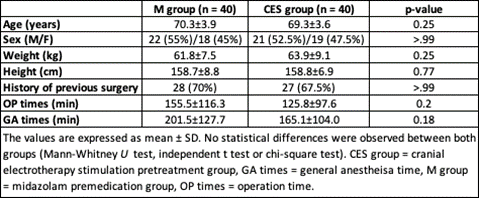
A total of 80 patients, with 40 in the CES group (mean age 69.3± 3.6 years) and 40 in the M group (mean age 70.3± years). No significant difference in age, sex, weight, height, history of previous surgery, operation time, or anesthesia time were observed between the two groups.
Anxiety Scores
The anxiety scores in the Preoperative Holding Area (PHA) were significantly lower in the CES group compared with the M group (p = .02).

Sedation Scores
The sedation scores in the PHA were significantly lower in the CES group than those in the M group (p < .001).

Vital Signs & Oxygen Saturation
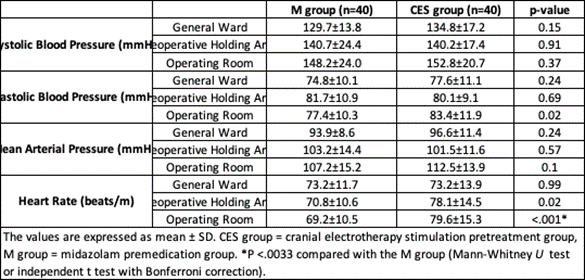
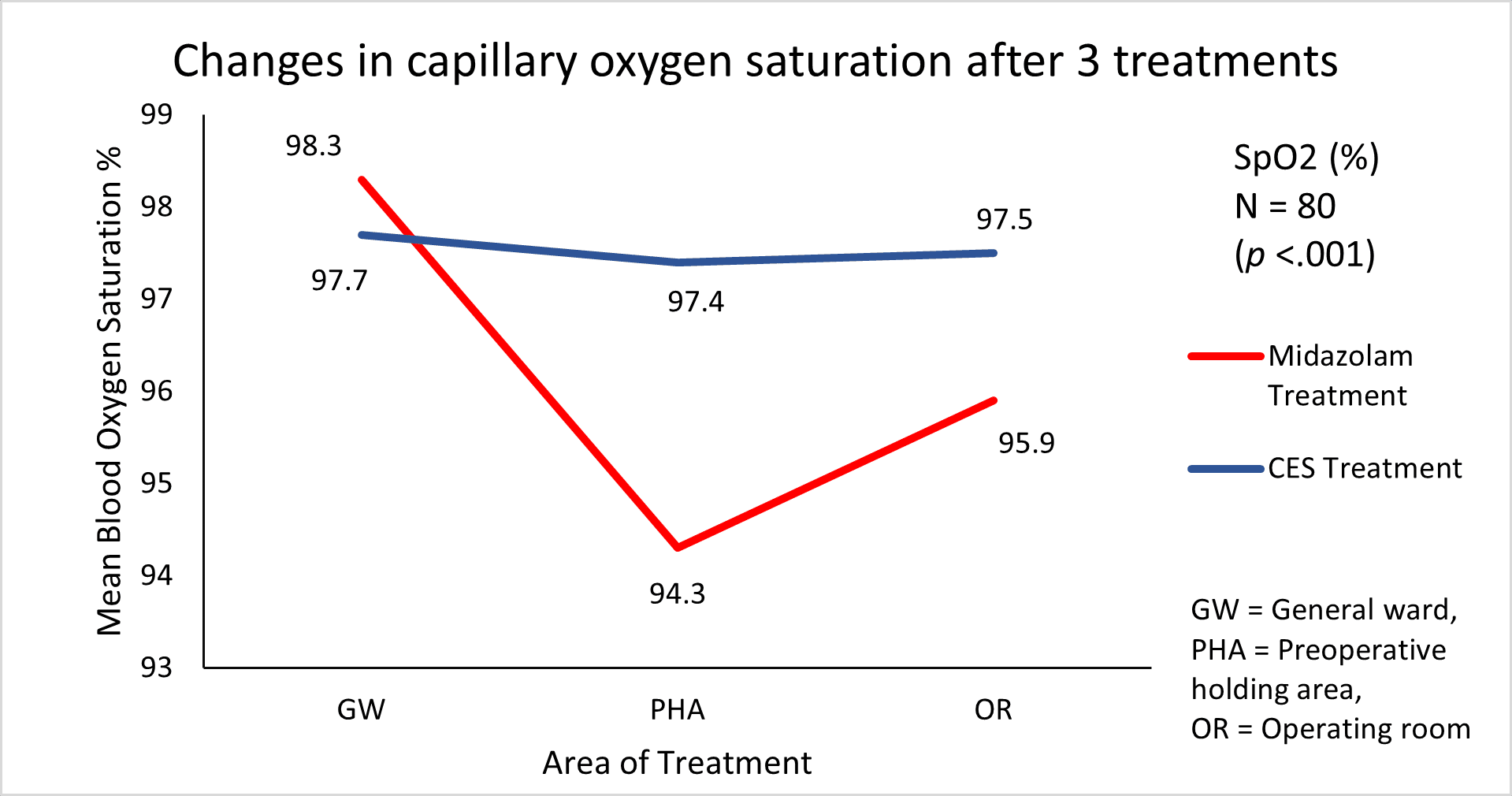
Heart rates in the OR were significantly slower in the M group than those in the CES group (p < .001). Oxygen saturations in the PHA and the OR were significantly higher in the CES group than those in the M group (p < .001).
Conclusion
In 65- to 79-year-old patients with American Society of Anesthesiologists Physical Status Classification II or III, CES pretreatment, in comparison with the midazolam premedication, resulted in lower anxiety levels in PHA with less risk of over-sedation and respiratory depression before surgery.
Their results showed that pretreatment with CES reduces preoperative anxiety levels and withdrawal responses to rocuronium-induced pain. The study concluded that the noninvasive nature of CES and the absence of serious side effects, indicate it can safely be used on the day before and the day of surgery.
Experience the Clinical Benefits of Alpha-Stim
Join thousands of patients finding safe, drug-free relief from anxiety, insomnia, depression, and pain.